Google Clarifies Favicon Crawling Rules for Redirect Chains
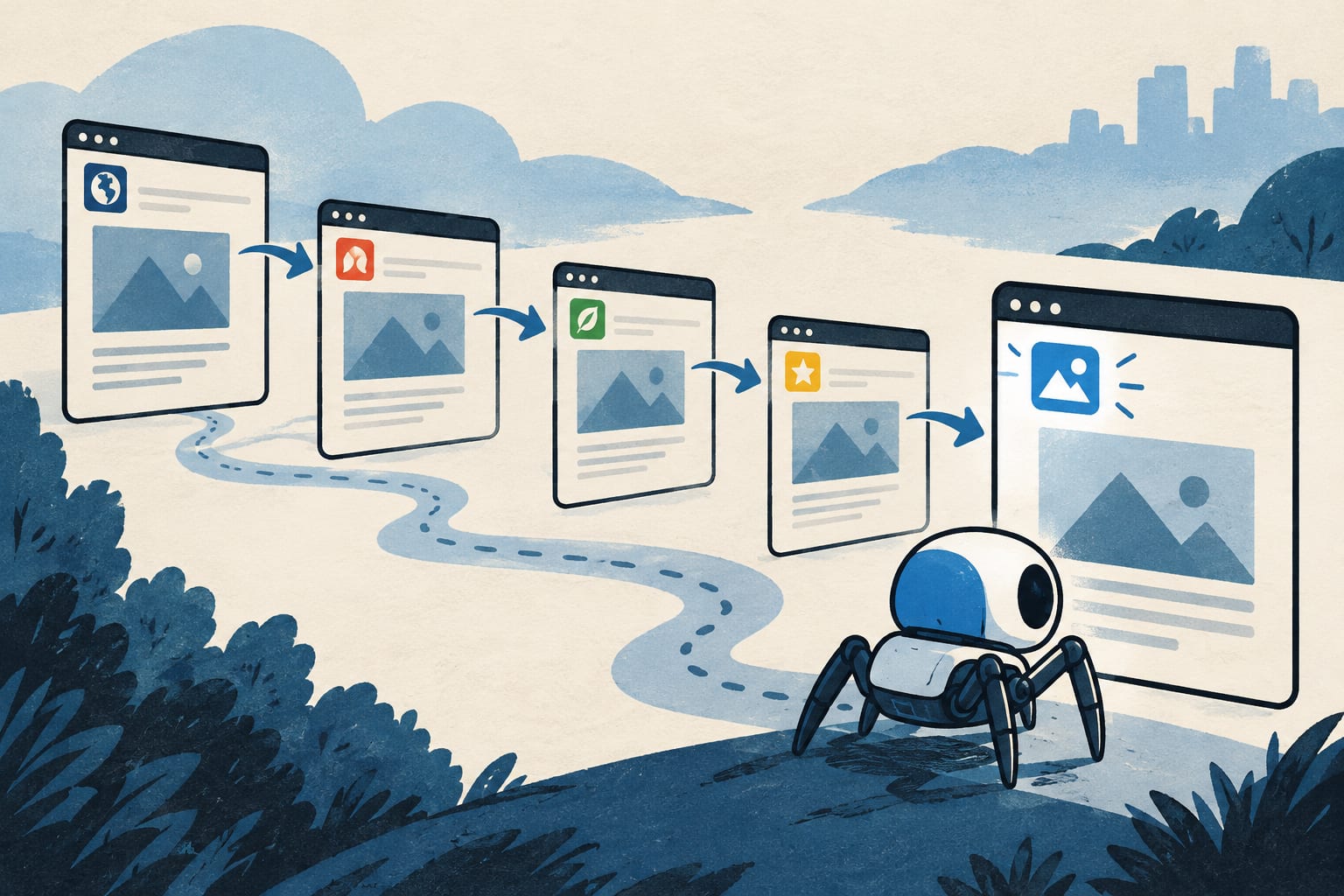
Google Search has updated its favicon documentation to explicitly require that Googlebot be able to follow redirects from a site's homepage through to the page where the favicon is specified. The revised guidance also reiterates that none of these URLs, including any in the redirect chain, can be blocked from crawling by robots.txt or other means. The change affects anyone managing technical SEO or site infrastructure who relies on favicon visibility in Google's search results and other surfaces.
The documentation previously stated a simpler requirement: that Googlebot-Image must be able to crawl the favicon file and Googlebot must be able to crawl the homepage, with neither blocked from crawling. The updated bullet point now reads that Googlebot must be able to crawl the homepage, follow any redirects from there to the page where the favicon is specified, and that Googlebot-Image must be able to crawl the favicon file itself. It adds that these URLs must not be blocked from crawling by a robots.txt file or by other means.
Search Engine Roundtable, which first flagged the update, included screenshots comparing the old and new language side by side. The outlet characterized the change as more of a clarification than a substantive policy shift, but noted it is a useful one for site owners to be aware of.
As a senior editor at a trade publication who covers search engine updates for people working in SEO and site operations daily, this kind of documentation tweak is worth flagging precisely because it is easy to overlook. Favicon display issues are a common troubleshooting request, and Google rarely spells out redirect-chain requirements this explicitly. The update removes ambiguity about what "crawlable" means when a homepage uses one or more redirects before reaching the actual favicon reference.
Impact
For site owners and SEO practitioners, the practical impact centers on auditing redirect chains between the homepage and wherever the favicon is declared. If any hop in that chain is blocked by robots.txt or otherwise inaccessible to Googlebot, the favicon may fail to appear in search results even if the final destination page and the favicon file itself are both crawlable.
The update does not appear to introduce new costs or timelines beyond the need for a technical check. There is no indication from Google that this reflects a change in how favicons are actually processed or displayed, only that the documentation now describes the existing requirement more precisely. Search Engine Roundtable's characterization of the update as a clarification rather than a new rule supports that reading. Still, compliance now has a clearer bar: the entire path from homepage to favicon file, including intermediate redirects, needs to be open to Googlebot and Googlebot-Image.
There is no competitive angle reported here, as this is a crawling and indexing requirement that applies uniformly across all sites using favicons, not a ranking factor or feature rollout tied to specific competitors.
What to watch
Technical SEO teams should audit their homepage's redirect behavior to confirm that any hops leading to the favicon-specifying page are not disallowed in robots.txt or otherwise inaccessible. This is especially relevant for sites that have restructured URLs, migrated domains, or implemented HTTPS or www redirects, since any of those changes could introduce a blocked step in the chain without anyone noticing.
It is also worth double-checking that the favicon file itself remains crawlable by Googlebot-Image, separate from the homepage and redirect requirements. Sites using CDNs or third-party hosting for static assets like favicons should verify that those paths are not inadvertently restricted.
Finally, keep an eye on Google's Search Central documentation for further clarifications like this one. These kinds of small wording updates often follow confusion raised in help forums or through support channels, so they can be an early signal of common technical issues Google is seeing across the web. Search Engine Roundtable's forum discussion thread on X is one place this is already being discussed, and similar documentation tweaks tend to surface there first before getting wider attention.
Site owners tracking how Google handles favicon redirects sometimes use an auto backlink tool to monitor link health, though it should never replace a manual audit of redirect chains.
Webmasters who manage favicon redirects alongside their broader link profile often pair these technical checks with a reliable seo backlinks builder to strengthen site authority.
Sites that keep their favicons crawlable and load quickly tend to look more trustworthy, which can help them get backlinks from other publishers.
Source: Search Engine Roundtable
Our last article on this: How Sports Clubs Can Determine Whether A Backlink Is Harmful