SpeedyIndex Study: Only 3.7% of Purchased Backlinks Survive in Google’s Index After One Year
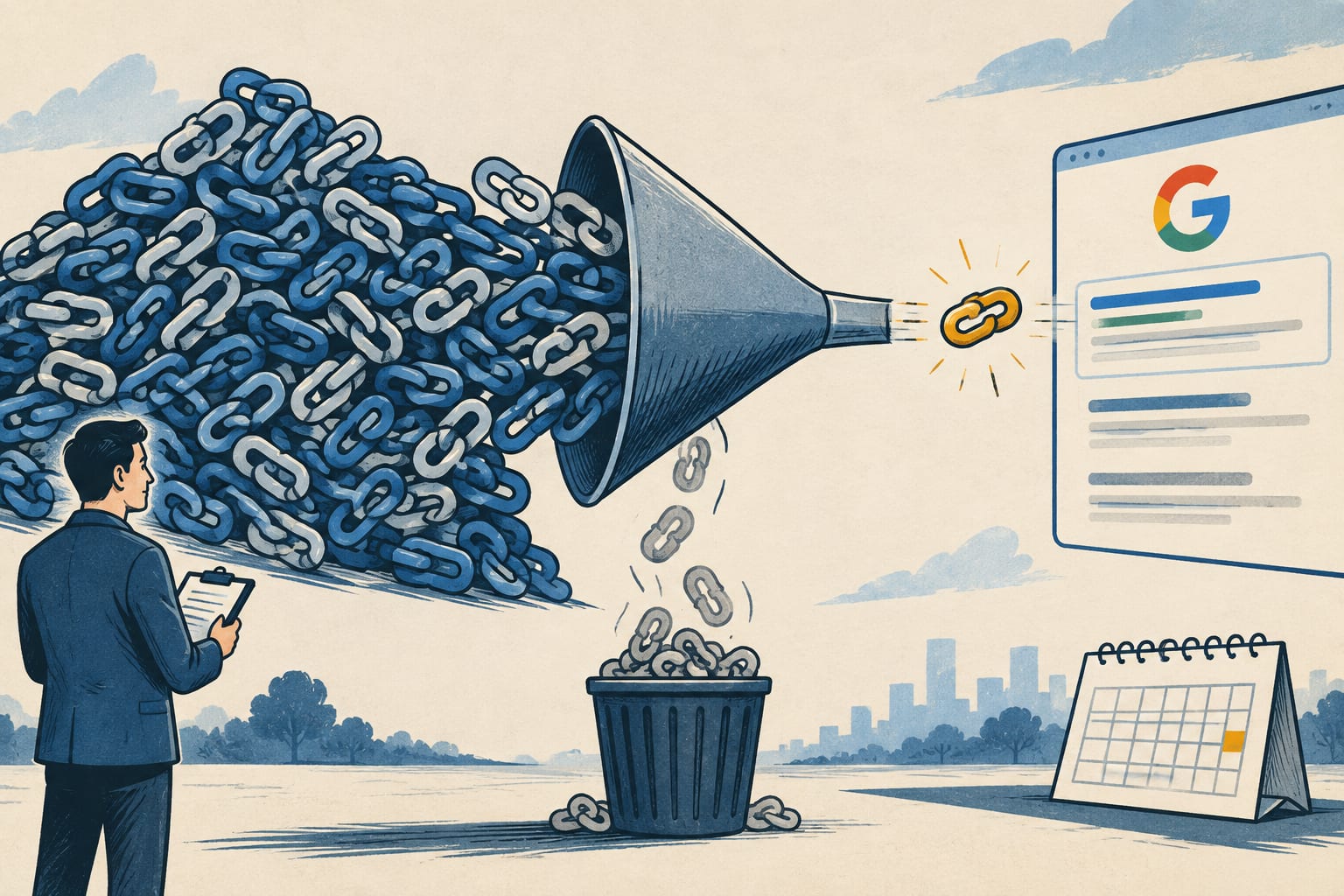
SpeedyIndex has published a case study tracking 15,389 backlinks the company purchased itself on Fiverr and Kwork, finding that just 562 links, or 3.7%, remain in Google's index a year after purchase. The findings affect SEO professionals, link buyers and agencies who rely on paid backlink placements as part of off-page strategy, and raise questions about the actual value delivered by marketplace link sellers.
The study tracked links from acquisition through two check points: an initial crawl on August 21, 2026, and an index verification on October 29, 2026. Each URL was assigned one primary outcome, with six categories accounting for the full set. Dead links, meaning domains that no longer resolve, pages returning 404 or 410 errors, parked domains or redirects to homepages, made up the largest share at 33.7%. Live and open pages, those returning HTTP 200 with no indexing block, accounted for 21%, but only 8.6% of those technically clean pages were actually indexed by Google.
Error responses, including 403 or 5xx codes, SSL failures and timeouts, represented 13.4%. Links redirected to a different page than originally purchased made up 11.9%, matching the share of URLs sitting behind Cloudflare challenges that could not be verified and were counted as unverified rather than dead. Pages blocked from indexing through noindex tags, robots.txt disallows or canonical redirection made up 8.1% on a primary basis, rising to 14.8% when counting every blocking signal regardless of a page's main outcome.
At the domain level, the numbers were more severe: 4,738 of 5,088 linking domains, or 93.1%, had no indexed link at all. SpeedyIndex also noted that 95 dead pages were still showing in Google's index from an old cached copy and are expected to drop out eventually.
Linda Bjorkvin, Project Manager at SpeedyIndex, said the company bought the links itself across different sellers and tier levels specifically to audit the full chain rather than rely on a sample curated by someone else. She noted that of the 15,389 links purchased, Google currently sees 562, meaning fewer than two in a hundred paid links are live, open and indexed.
The study also found that a high Domain Rating does not guarantee indexability. Many popular platforms keep homepages open to crawlers while blocking user profiles, posts or shared files with noindex directives, pages sellers continue to offer as link placements. SpeedyIndex compiled a public table listing 451 closed page types across 437 sites, noting that on 266 of those sites the homepage itself remains open to indexing even as deeper pages are closed. Bjorkvin said a seller can point to a clean-loading page on a domain with Domain Rating above 90, but a noindex tag on that specific page renders the link invisible to Google no matter how strong the domain appears.
Comparing marketplaces, Kwork links were live and open more often than Fiverr links, 27.5% versus 19.4%, though roughly a third of links from both platforms were dead. Indexing rates were close regardless: 3.6% for Fiverr and 3.4% for Kwork. Link age affected the cause of failure more than the failure rate itself. Among links older than 12 months, 18.5% no longer resolved at the DNS level, compared with 2.3% for links aged 6 to 12 months, where deleted pages returning 404 errors were the dominant cause.
Impact
For buyers of paid backlinks, the study suggests that domain authority metrics alone are an unreliable signal of whether a specific linking page will ever be seen by Google. The gap between "live and open" status and actual indexing, just 8.6% of clean pages, points to added diligence costs for anyone vetting sellers on marketplaces like Fiverr and Kwork. SpeedyIndex frames its own Pay per Indexed and Pay per Submission pricing models, including automatic token refunds for unindexed links, as a response to this exact failure rate, though the company does not guarantee indexing itself.
What to watch
Link buyers should watch for noindex directives and robots.txt rules on the specific page being sold, not just the domain's headline metrics. The age-related shift from 404 errors to DNS-level dead links suggests older link packages warrant periodic re-auditing. SpeedyIndex's full case study, including its checklist and closed-page-type table, is available in six languages for teams evaluating current supplier lists.
Marketers who rely on an auto backlink tool to build links at scale should check indexing rates regularly, since many automatically generated links may never be retained by Google.
Marketers who rely on a seo backlinks builder should monitor link retention regularly, since purchased links can disappear from Google’s index well before a year passes.
Many site owners spend heavily to get backlinks quickly, only to find that most of them disappear from search indexes within a year.
Source: FinanzNachrichten.de
Read our previous article: SEO Agencies Lean on AI Automation to Scale Client Delivery in 2026