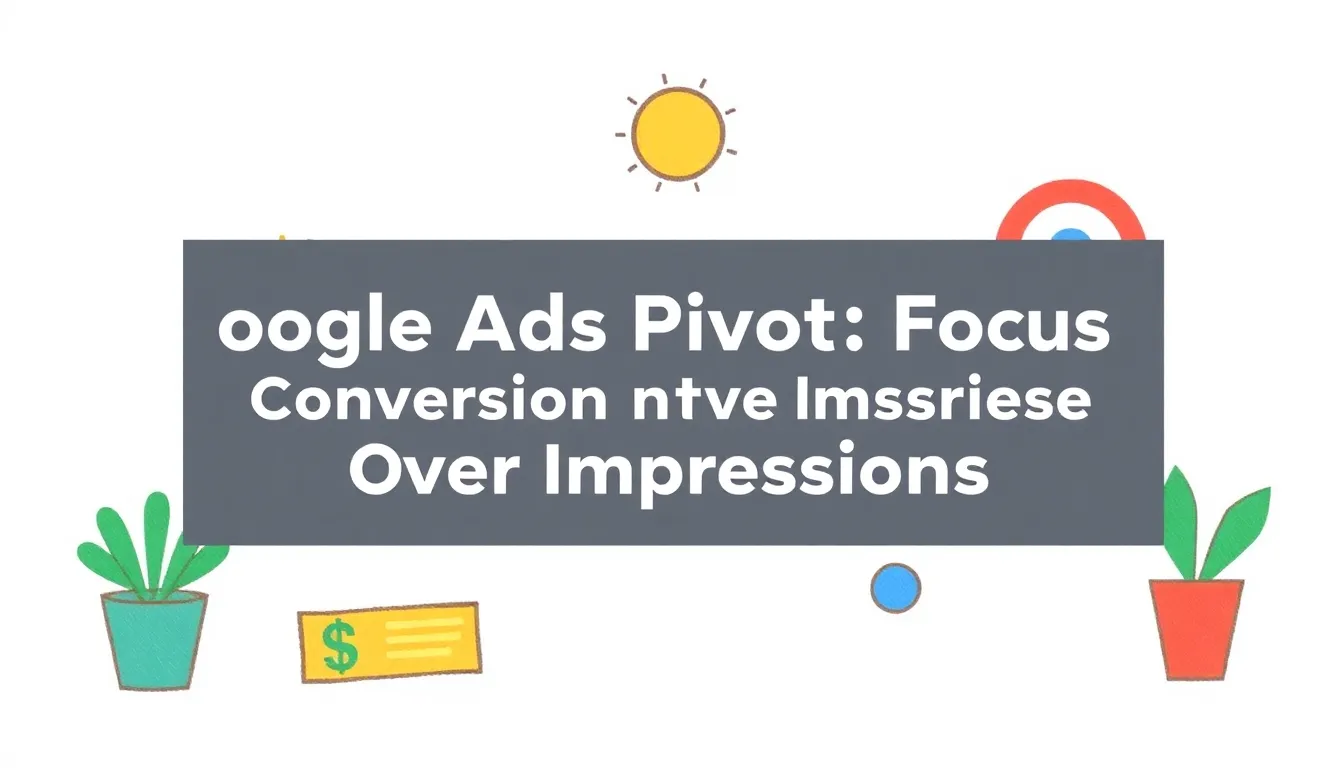
Google Ads Pivot: Focus on Conversions Over Impressions
Google’s Strategic Shift in Advertising
Google Ads has recently made significant changes to its Performance Planner tool by removing support for Display and Video campaigns. This move is indicative of a broader strategy to prioritize conversion-focused advertising methods over traditional impression-based metrics. Advertisers previously relied on impression-related statistics, such as impression share, to gauge the effectiveness of their campaigns. However, with the latest updates, Google aims to streamline the planning process, compelling marketers to adopt automation and performance-driven outcomes. As a result, those focusing on upper-funnel initiatives like Display and Video may find their forecasting capabilities significantly hampered. It marks a notable shift in how advertising success is defined, leading many to reassess their marketing strategies.
The Impact on Advertisers
With the removal of Display and Video campaign planning, advertisers are faced with new challenges in managing their campaign types. Performance Planner now supports only specific formats like Search, Shopping, App, Demand Gen, Local, and Performance Max. Existing plans featuring Display or Video campaigns are rendered inaccessible, forcing marketers to rethink their approach to awareness and conversion strategies. For businesses accustomed to measuring success through impression metrics, adapting to a model that emphasizes conversions may require additional training and tools. Advertisers will need to utilize other resources, such as link building tools, to create backlinks that enhance their visibility in a more competitive marketplace. This shift necessitates a reevaluation of the metrics deemed important for assessing campaign success.
Adapting to the New Landscape
As Google continues to advocate for performance-driven planning, advertisers must find innovative ways to adjust their strategies. This may involve the increased use of authority backlinks to boost online authority and streamline digital reach. The emphasis will likely move toward maximizing conversions and optimizing campaigns for relevant target audiences. Marketers will need to turn to new analytical methods and tools that align with the updated Google Ads framework. While the loss of impression-based metrics could initially complicate planning for upper-funnel channels, it may also pave the way for more effective advertising practices. By embracing automation and focusing on measurable outcomes, advertisers can adapt successfully to this evolving landscape and safeguard their marketing investments.
Source: Google Ads drops Display and Video planning from Performance Planner