Google Details Crawling, Indexing and Recovery Timelines at Search Central Live
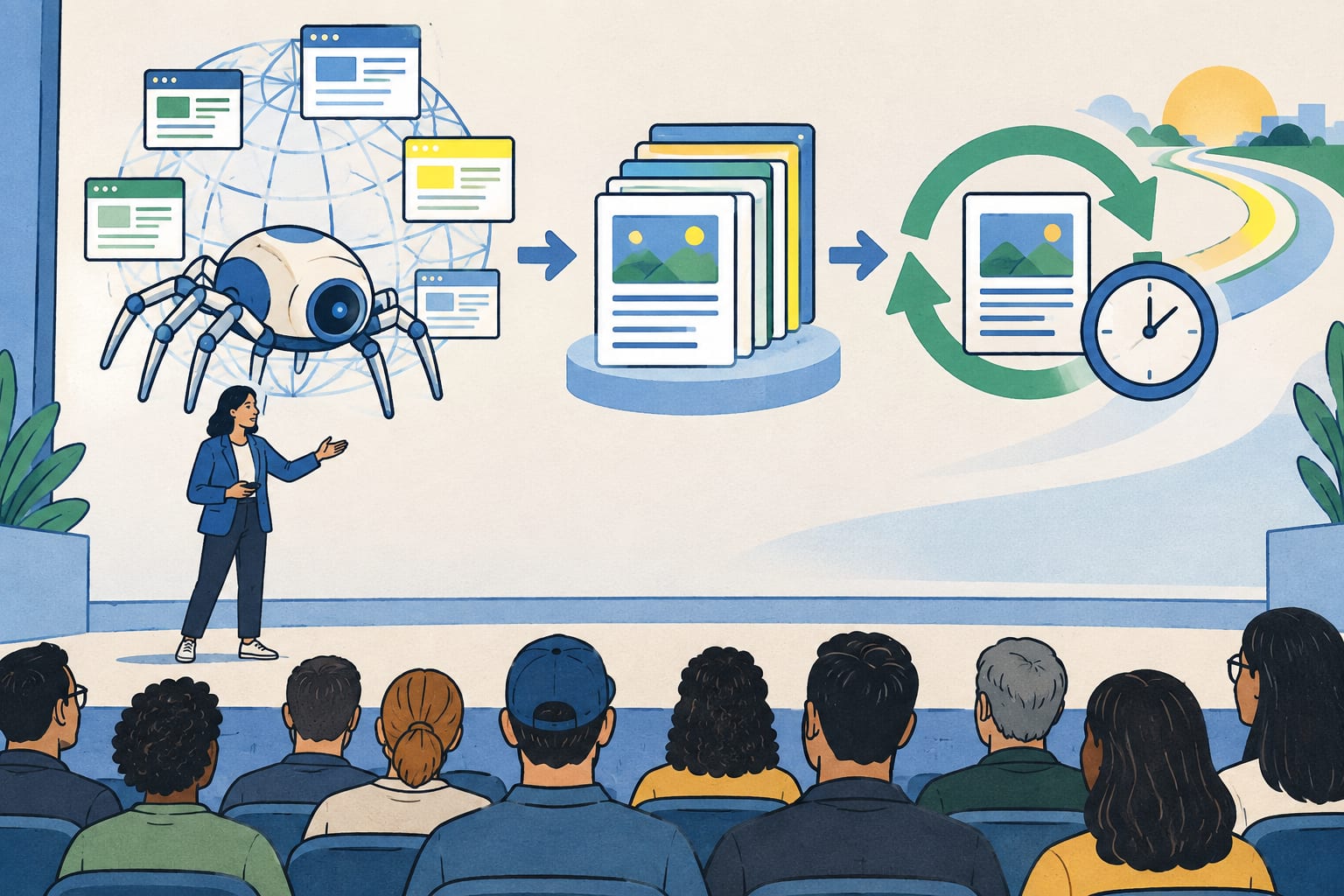
Google's Gary Illyes laid out timing ranges for common Search processes at Search Central Live Deep Dive Europe in Barcelona, covering everything from discovery of a new URL to settlement after a site move. The figures, shared during an Oct. 2 session, give SEO teams their clearest reference points yet for how long technical changes typically take to process through Google's systems.
The details come from a recap written by John Campbell of ROAST, one of the event's community speakers, since Google has not posted the slides to its Search Central events page as of publication. As a senior editor at a trade publication covering search for working professionals daily, it's worth flagging that these numbers originate from an internal Google analysis, not a published study, so some context is missing.
According to Campbell's recap, each process came with a fastest, typical, and slowest time. Illyes cautioned that these stages are interconnected: a URL must be crawled before it can be indexed, so any delay at the crawling stage pushes back everything downstream.
On crawling and indexing specifically, the recap lists about 20 hours as the typical time for Google to discover a brand-new URL, versus roughly 30 days to refresh a URL it already knows about. End-to-end indexing, defined in the recap as the point when all critical processes finish successfully, wasn't given a single figure, but a small site move was noted as taking a few weeks. That aligns with Google's own site-move documentation, which states that small to medium-sized sites typically move most pages within a few weeks, while larger sites take longer.
Canonical changes get a separate note: Google's troubleshooting guide, updated in July, states that pages can sit in a duplicate cluster for up to two weeks after a content fix is made.
Title and snippet updates were listed as taking one to two days in the typical case, stretching to several weeks or months in the slowest scenarios. Removal requests submitted through Search Console were the fastest process cited, at about two hours typically and 24 hours at the slowest. Manual action removal sits at one to two weeks typically, four to six weeks at the slowest, and considerably longer for sites that have gone dormant.
The core update row measures recovery time rather than the update's own rollout. The recap puts typical recovery at three to six months, with the slowest cases running six months to a year, which the table ties to the arrival of the next core update. That matches Google's own core update documentation, which states that some sites see changes within days while confirming overall improvement can take several months, and that a lack of visible effect after a few months may simply mean a site is waiting on the next update.
Notably, the recap and Google's own materials don't specify a sample size, time period, or exact definition of "typical." The fastest times for each process were also left out of the shared tables. Five of the slowest-case entries, covering sitemap processing, end-to-end indexing, and structured data updates, list "never" as an outcome, with three of those adding "quality" in parentheses, suggesting some changes simply won't process without further fixes.
Impact
These ranges give SEO teams language to set expectations with clients and stakeholders on how long technical fixes take to show results. A site move still open at three months lands at the upper edge of a typical timeline, per the recap, while slowest-case scenarios stretch past a year. For agencies fielding regular "has this gone live yet" questions, having Google-sourced ranges for title updates, canonical fixes, manual action removals, and core update recovery offers a defensible basis for client reporting, even without exact sample data behind the numbers.
What to watch
Teams managing site moves or core update recovery should track progress against both the typical and slowest ranges rather than expecting a fixed deadline. Watch for Google to eventually publish the Barcelona slides directly on its Search Central events page, which would clarify sample size and definitions missing from the attendee recap. Also worth monitoring: the "never" outcomes tied to quality issues in sitemap processing, indexing, and structured data, since those suggest no amount of waiting will resolve certain problems without a content or technical fix first.
Understanding how auto backlink tool indexing works can help webmasters better align their link-building strategies with Google’s official crawling and indexing timelines.
Understanding Google’s recovery timelines is essential for any seo backlinks builder recovery strategy that aims to restore a site’s search visibility.
Understanding how to get backlinks indexing quickly is crucial for improving your site’s visibility after Google crawls and indexes your content.
Source: Search Engine Journal
Our last article on this: Backlink Building Services Ranked for Tech and Security Brands as AI Search Reshapes SEO