Nerdbot Publishes Comparison of 8 AI SEO Agencies
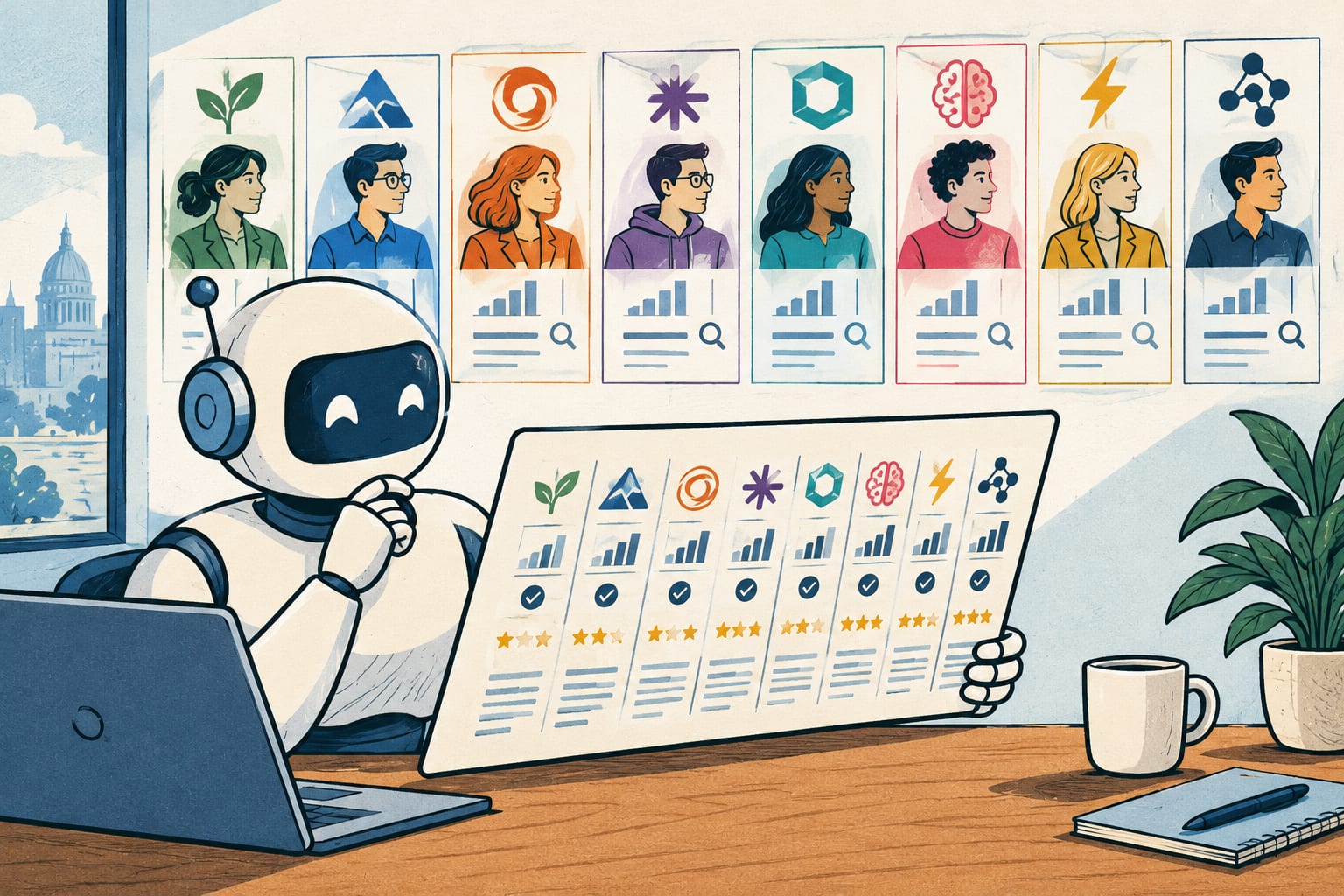
Nerdbot has published a roundup comparing eight AI SEO agencies, adding to a growing field of buyer's guides aimed at marketing teams evaluating vendors that blend artificial intelligence tools with traditional search optimization services. The piece targets businesses and in-house marketers trying to sort through an increasingly crowded vendor pool as AI-assisted content generation, technical auditing, and ranking strategy become standard offerings rather than differentiators.
The comparison lands at a moment when search marketing teams are under pressure to adapt to AI-driven changes in how search engines crawl, rank, and surface content. Agencies that once sold purely manual SEO services, keyword research, link building, technical audits, have increasingly layered AI tooling into their workflows, whether for content drafting, data analysis, or automated reporting. A roundup format like this one serves buyers who need a quick reference point before committing budget to a vendor relationship that typically runs months, not weeks.
As a senior editor at a trade publication who tracks search marketing and digital agency trends for an audience that works in this space every day, the value of this kind of comparison lies less in any single agency's feature list and more in what it signals about buyer behavior. Marketing leaders are no longer asking whether to use AI in their SEO strategy. They are asking which vendors have operationalized it credibly enough to justify a contract.
Impact
The publication of an agency comparison piece itself reflects a shift in how SEO services are marketed and purchased. Buyer's guides and "best of" roundups have become a primary discovery channel for B2B services, replacing some of the direct-sales outreach that used to dominate agency client acquisition. For agencies, inclusion in a widely read comparison can function as a lead-generation channel in its own right, which is part of why the market for these roundups has expanded across trade sites and general-interest outlets alike.
For buyers, the practical impact is a lower cost of initial vendor research. Rather than requesting proposals from a dozen agencies, a marketing team can use a comparison article to narrow a shortlist before engaging in deeper conversations about pricing, scope, and reporting cadence. That said, the source material here does not disclose specific pricing, contract terms, or performance benchmarks for any of the eight agencies named, so readers evaluating vendors will still need to request those details directly rather than relying on the roundup alone.
Competitively, the proliferation of AI-labeled SEO agencies puts pressure on traditional, non-AI-branded firms to clarify what AI capabilities they actually offer versus what is marketing language. As more agencies describe themselves as "AI SEO" providers, differentiation increasingly comes down to transparency: whether a firm can show measurable outcomes tied to its AI tooling rather than simply using the term as a positioning device. This dynamic also raises the bar for compliance and disclosure, particularly as search engines continue to refine guidelines around AI-generated content and its treatment in rankings.
What to watch
Marketing and SEO professionals evaluating agencies from this kind of comparison should watch for a few things in the weeks ahead. First, look for follow-up reporting or case studies that go beyond the initial roundup to validate claimed results with actual client data. Second, watch how search engines continue to update their stance on AI-assisted content, since any policy shift could change which agency practices are considered safe versus risky for long-term ranking stability. Third, keep an eye on pricing transparency, as agencies competing in a crowded AI SEO field may begin publishing more detailed rate cards or performance guarantees to stand out.
Finally, expect more comparison content of this type to appear across trade and consumer tech outlets as the AI SEO agency market continues to grow. Readers should treat these roundups as a starting point for vendor discovery rather than a substitute for direct due diligence, including reference checks and a clear review of what AI tools are actually embedded in an agency's deliverables versus what is used purely for internal efficiency.
Many agencies now bundle an auto backlink tool into their AI SEO packages, so buyers should check how link quality is vetted before signing up.
Many businesses evaluating AI SEO agencies also look at tools like an seo backlinks builder to strengthen domain authority alongside on-page optimization.
AI SEO agencies often promise faster results, but businesses should still verify whether these providers can genuinely help them get backlinks from reputable, relevant websites.
Source: nerdbot
Related reading from us: Kyle Eggleston Publishes Two Studies on AI Content Performance and Google AI Overview Citations