AI scraping puts SEO trackers in Google’s defensive line
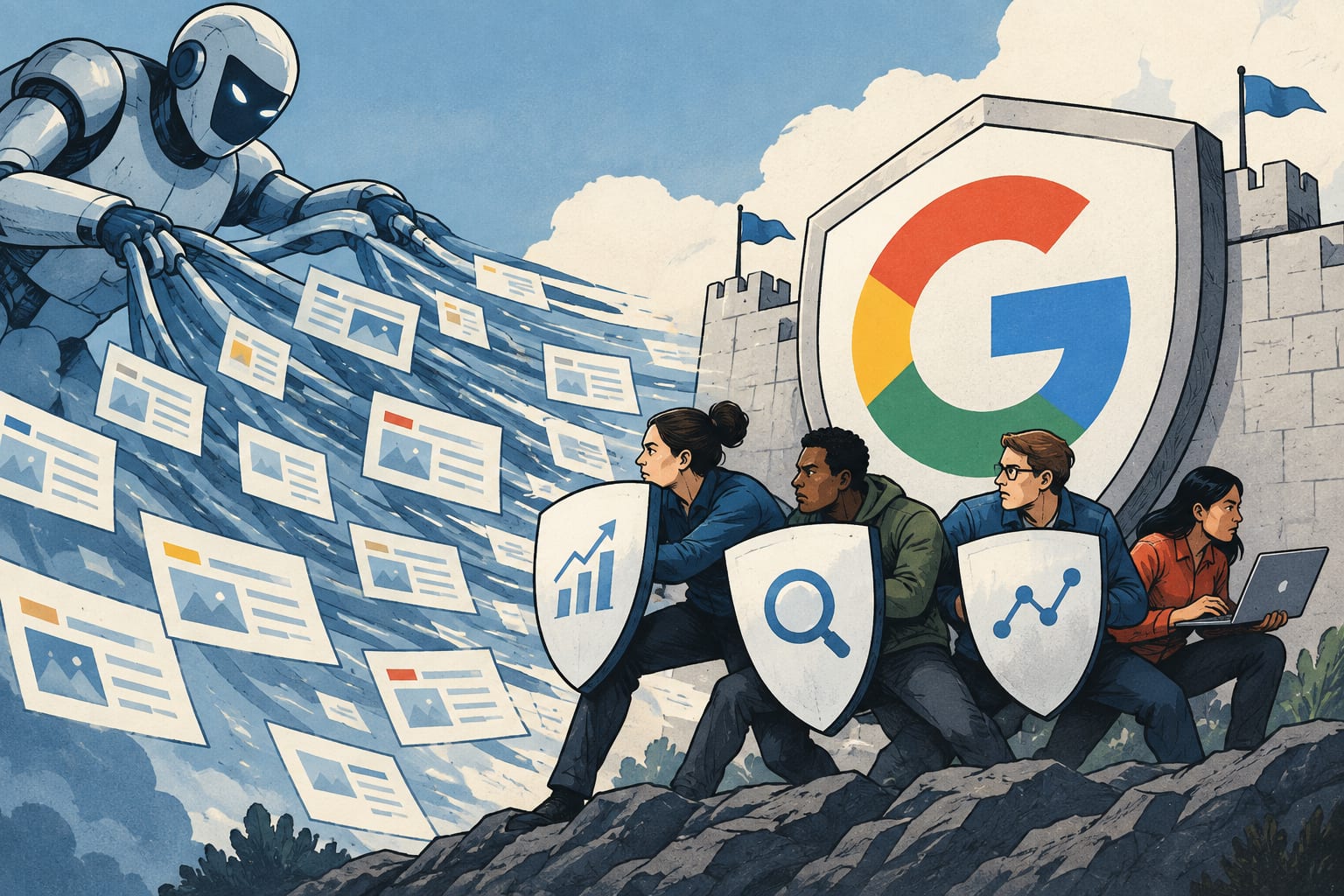
Google has stepped up measures against automated scraping of its search results, a move that is now catching SEO rank-tracking tools in its net as the company works to curb the growing volume of AI-driven scraping activity.
Rank trackers, the tools SEO teams rely on to monitor keyword positions, SERP features and competitor visibility, depend on repeatedly querying Google Search at scale. That behavior looks increasingly similar to the scraping patterns used by AI companies harvesting search data to train models or power answer engines. As Google tightens its defenses against the latter, the former is getting swept up as collateral, according to YourStory.com's reporting on the trend.
The underlying tension is not new. Google has long maintained terms of service that discourage automated querying, and scraping has always existed in a legal and technical gray zone. What has changed is the scale and intent of the newer wave of scraping, driven by AI firms pulling search results to feed large language models and retrieval systems. That has pushed Google toward more aggressive bot detection, rate limiting and CAPTCHA challenges across its search infrastructure, and SEO tracking vendors are reporting the effects.
For an industry editor who covers SEO and search marketing tools for a living, the story lands as part of a broader pattern already visible across the trade: platforms that once tolerated a certain amount of automated access are recalibrating as AI scraping multiplies the load and raises the stakes around data control. The publication frames this specific development as a defensive posture from Google rather than a targeted attack on SEO vendors, but the practical effect on those vendors is the same regardless of intent.
Impact
The immediate impact falls on SEO tracking vendors and the agencies, in-house marketing teams and consultants who depend on their data. If Google's anti-scraping measures make it harder or more expensive to pull ranking data at the frequency and scale these tools promise, vendors face rising operational costs to maintain data collection, whether through proxy networks, CAPTCHA-solving services or other workarounds. Those costs tend to get passed down to customers through pricing changes or reduced update frequency.
Reliability is the second-order issue. SEO professionals use rank tracking to make real-time decisions on content strategy, technical fixes and reporting to clients or leadership. If data collection becomes less consistent because of blocked requests or throttled access, the trustworthiness of that data comes into question, which complicates reporting and attribution across the industry.
Competitively, this could widen the gap between larger SEO platforms with the resources to build more sophisticated, compliant data-gathering infrastructure and smaller or newer entrants that rely on simpler scraping methods. Vendors that have invested in official APIs, data partnerships or alternative data sourcing may be better positioned to weather tighter restrictions than those leaning on direct scraping.
There is also a compliance dimension. As Google formalizes its stance against scraping in response to AI-driven activity, SEO tool providers may find themselves needing clearer terms of use, data licensing arrangements or technical adjustments to stay on the right side of Google's policies, a shift that touches contracts and product roadmaps across the sector.
What to watch
SEO professionals and marketing leaders should watch how individual rank-tracking vendors respond in the coming months. Watch for vendor communications about data accuracy, update frequency or pricing changes that might trace back to tighter scraping restrictions. Any public statements from Google clarifying its policy toward automated querying, distinct from AI scraping, would also be worth tracking, since it could determine whether SEO tools get an explicit carve-out or remain lumped in with broader anti-scraping enforcement.
It is also worth watching whether vendors pivot toward official data partnerships, APIs or alternative methodologies that reduce reliance on direct scraping, since that shift could reshape how rank tracking products are built and priced. Finally, keep an eye on competitive moves. Vendors who adapt quickly to new restrictions may gain market share from those who struggle to maintain reliable data pipelines, making this less a one-time disruption and more an ongoing test of resilience across the SEO tooling market.
As AI scraping intensifies, traditional tools like an auto backlink tool seo face challenges in maintaining data accuracy and compliance with Google’s evolving guidelines.
As AI scraping intensifies, SEO professionals using an seo backlinks builder google tool must adapt their strategies to maintain visibility in search results.
While traditional methods to get backlinks seo remain important, AI scraping now threatens the accuracy of tracking tools that monitor these crucial ranking factors.
Source: YourStory.com
If you missed it: Backlink Platform Audit Finds Most "Dofollow" Sources Pass No SEO Value